In the present, businesses are experiencing a paradigm shift, in which speed, flexibility, and efficiency aren’t optional, but necessary. The outdated infrastructure, which was costly and slow to change and adapt to the need for real-time analytics and distributed operations. ScalerPi brings a new view to the table by combining edge computing and practical engineering. This allows for solutions that scale.
The new technology is focused on industrial automation, using Raspberry Pi. It allows organizations to change the way they design and manage their systems. Businesses can now utilize small, lightweight devices to replace bulky, centrally-located hardware. This approach not only decreases the latency, but it lets teams react rapidly to any changes in conditions.
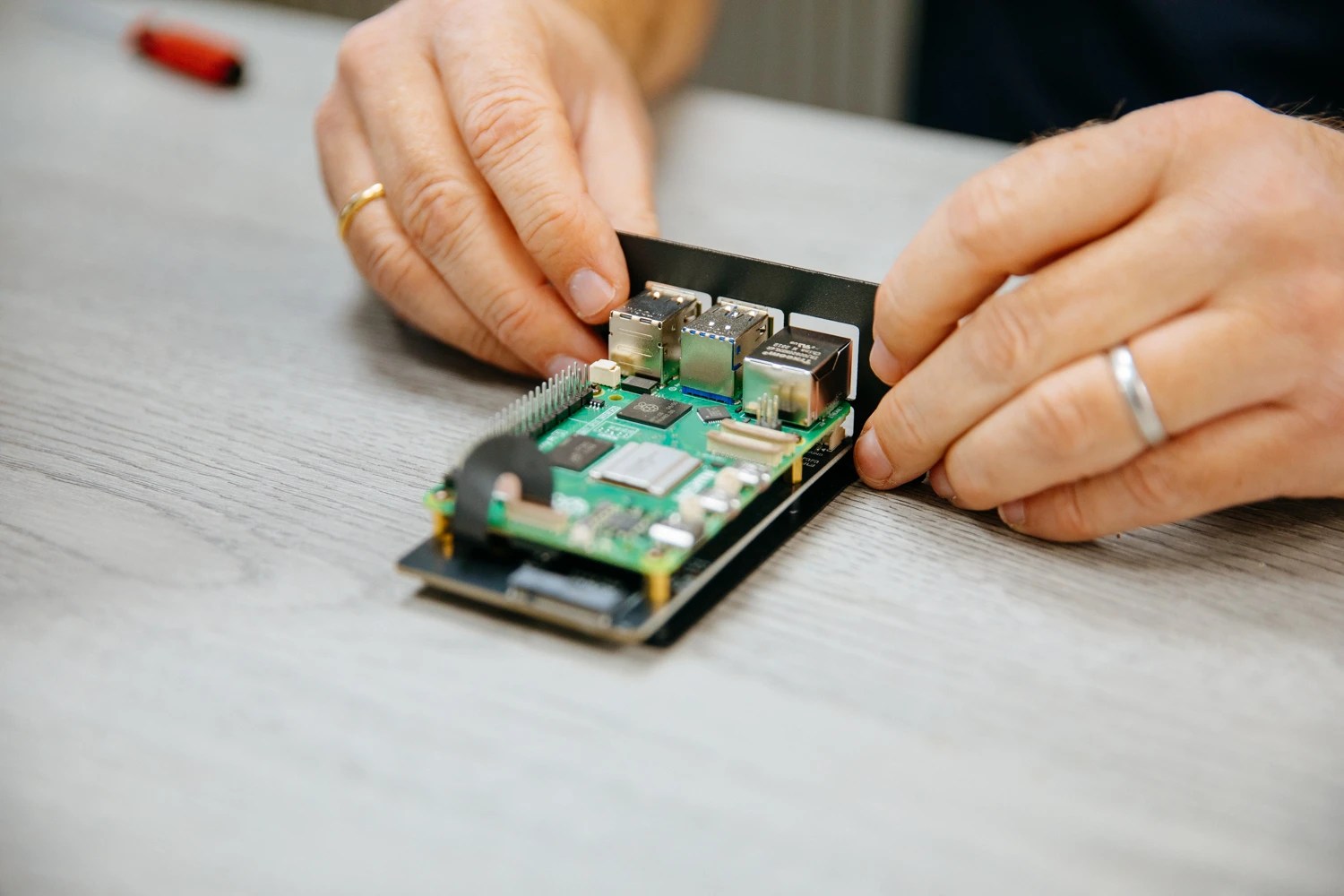
Data-driven Action at the Edge
The main benefit of edge computing lies in its ability to perform data processing locally. In the absence of cloud-based solutions, waiting for them to respond in many industrial settings isn’t practical. ScalerPi tackles this issue by providing the infrastructure to operate on its own while still integrating with broader systems as needed.
An essential component of this setup is the industrial Raspberry Pi IOT gateway, which acts as the central connection point between devices and applications. It provides seamless connectivity between sensors, machines, and software platforms. It ensures that data flows safely and efficiently. It’s possible to monitor the operations in real-time, detect issues quickly and maintain consistency across multiple locations.
For the logistics industry as well as environmental monitoring, this capability can be transformational. Systems are able to function in areas with poor connectivity or in remote areas to ensure that data and operations remain available.
Compact Power for Demanding Environments
In the field of industrial computing, balancing speed and practicality is one of the biggest challenges. Large servers may offer power, but they often have high prices as well as energy consumption and limitations in flexibility. ScalerPi provides industrial Raspberry Pi servers which deliver reliable computing with a compact and energy efficient design.
These servers are designed to work in real-world settings where there is a limited amount of space and power. Whatever the situation, whether they’re used in a manufacturing plant or retail outlet, or a remote monitoring station, they will provide constant performance, without the need for a complex infrastructure. The modularity of their systems allows for gradual expansion, helping businesses align their growth with the needs of the moment.
Taking this a step further with the small industrial Raspberry Pi compute module server gives you even more versatility. These servers, which are designed to withstand extreme conditions, feature toughness and superior processing capabilities. These servers are great for applications that need to be running continuously, such as intelligent city systems as well as industrial automation systems.
Flexible Deployment Through Containerized Delivery
Modern infrastructures have to be able to adapt, and containerization can help. ScalerPi integrates industrial Raspberry pi docker environments for an efficient and flexible management of applications. Docker allows businesses to launch, upgrade and scale applications rapidly without disrupting existing operations.
This reduces the time spent developing, and helps ensure consistency across deployments. The applications can be tested in one environment and seamlessly transferred to another, reducing the possibility of mistakes and improving overall reliability. If you manage several sites, this kind of control is invaluable.
Containerization can also be a tool for development. Teams can experiment with new products or services without impacting existing systems, making it easier to remain ahead of the curve in a competitive industry.
Practical Solutions for a variety of sectors
The strength of ScalerPi lies in its ability to adapt to diverse industries. Industrial automation using Raspberry Pi helps reduce downtime, improve efficiency, and allows for predictive maintenance in manufacturing. Machines are able to communicate and exchange data, forming an intelligent and connected production environment.
Edge technologies in agriculture help support better farming practices. Sensors can monitor crop health as well as soil condition. They can also monitor weather patterns.
The hospitality and retail sectors can benefit from understanding the behavior of customers in real-time. From digital signage to queue management, businesses are able to improve customer experience while maximizing processes. Public sector initiatives like smart cities are based on cutting-edge technology for tasks like environmental monitoring and asset tracking.
Bridging Hardware and Cloud without a doubt
The ability of ScalerPi to connect physical devices to cloud-based systems is the reason it stands out. By combining hands-on knowledge of hardware along with cutting-edge cloud technology creating a single platform that can handle both local processing as well as central management.
This method allows companies to scale up without complexity. No matter if you begin with a smaller deployment or scaling up to thousands of devices, the infrastructure remains easily manageable, safe and affordable. Transparent pricing, modular design and ease of use simplify the process of deployment. This enables organizations to focus on innovation rather than the operational issues.
A Future-Ready Approach to Industrial Technology
The demand for a reliable and flexible infrastructure will only increase as industries grow. ScalerPi offers a solution satisfy these requirements, by combining the ability to be flexible of Raspberry pi technology and the power of edge-computing.
From industrial Raspberry Pi servers to advanced IoT gateways, and containerized applications Each component is developed with scalability and practical use in the back of our minds. The system is built to not only support today’s requirements, but help businesses prepare for the future.